Herbert Ryland and the Fake Suffragettes
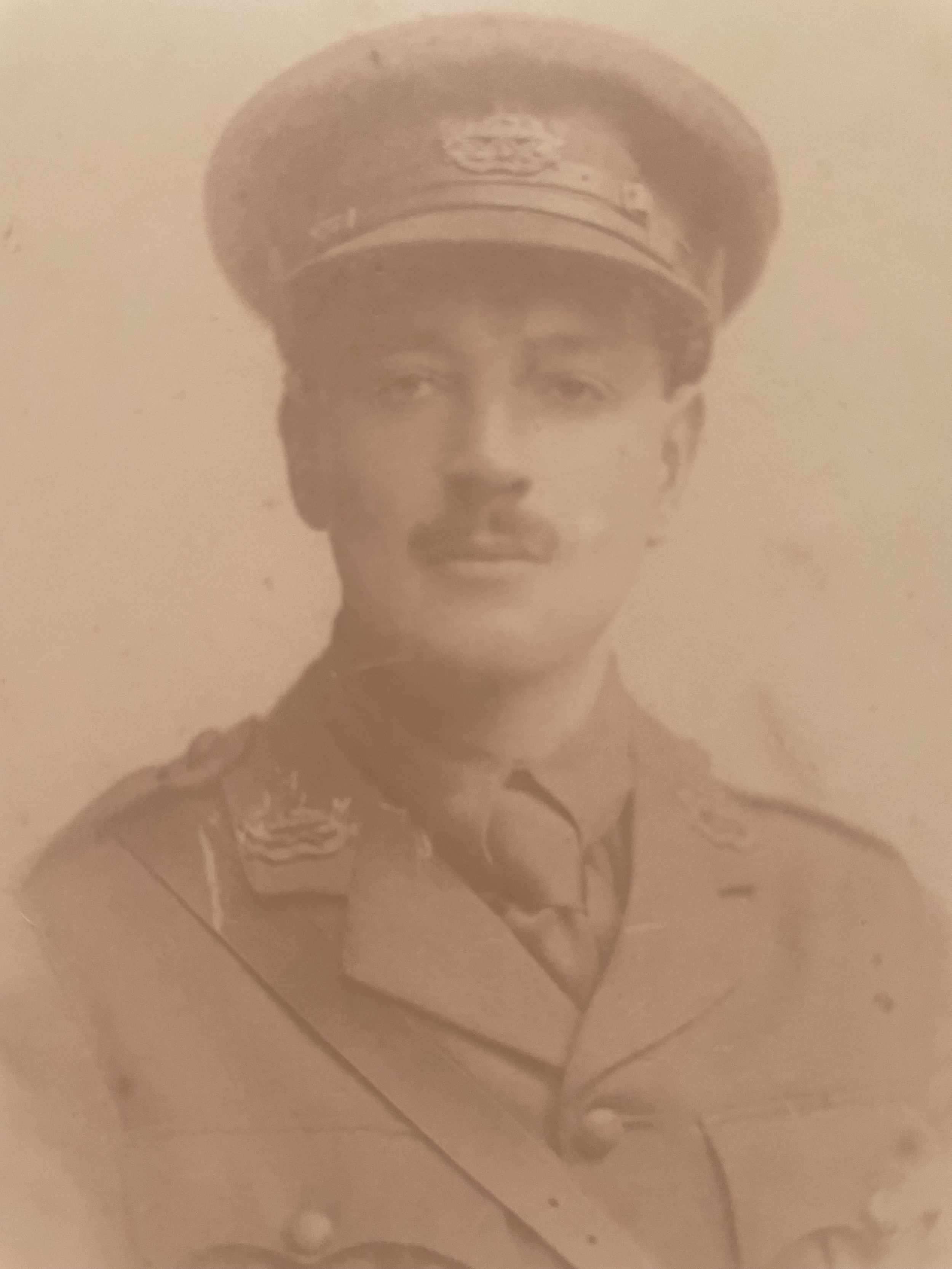
Herbert C. Ryland.
I never met my grandfather, Herbert Ryland, but stories of his chequered life have been a part of the family story for as long as I can remember. As a young man before the First World War, he travelled to the Caribbean and Central America, returning home on a banana boat to enlist on the outbreak of war in 1914. He married first a music-hall singer, and then, a former underwear model several decades his junior, my grandmother. There is no doubt, grandfather was a great ladies’ man. Nonetheless, my father came as a great surprise to his parents, Herbert by then in his 60s.
There are many tales of Herbert’s daring. According to the family legend, this led him to be the inspiration for a series of bestselling books about a debonair, adventurer and Robin Hood-style thief, called Simon Templar, aka the Saint. Certainly, he was a business manager, an accountant, and a friend of the author, Leslie Charteris. Grandfather survived a plane crash while selling the film rights in America (one of a number of instances where he cheated death). But in this blog, I want to go back to maybe his first scrap, but then again, given his propensity for trouble, probably not. And in recounting the tale, I should point out I do not condone his actions. In 1909, suffragettes were facing imprisonment, force-feeding, and violent opposition in their fight for women's votes, making them an easy target for mockery, not an appropriate subject for pranks.
At the end of December 1909, grandad was a young man. The son of an austere printer in the Cotswold town of Stow-on-the-Wold. He already had a reputation, according to the family, as a joker, but that winter he pushed things too far.
It began when posters appeared around the village of Lower Swell that announced a Suffragette meeting to be addressed by a ‘Mrs Gilray’ and ‘Miss Dowson’ was to take place on the village green two days after Christmas at 7 in the evening. According to accounts, every man, woman and child turned out on what was probably a cold and certainly dark evening. I can only assume the darkness was meant to provide cover for what was about to take place: my grandfather, with two accomplices dressed as women, speaking to the crowd. They were supported by another conspirator who introduced the ‘ladies’ and asked the assembly to excuse the ‘hoarseness’ of the speakers as they had already spoken at four village meetings. What happened next is a little hazy, but according to the Wilts & Glos Standard, after several minutes, a lady shouted out, “it’s a man”. A lamp was shoved into one of the speaker's faces, and the deceit rumbled. Several reports suggested that Herbert and his companion, likely his brother Frank, were stripped of their disguises and ducked into a pond or stream (depending on the telling). A thrashing was mentioned. The Cheltenham Chronicle further noted ‘a regular riot took place, stand up fights being the order of the night, but the visitors getting the worst of it, returned to their respective homes, sadder but wiser young men.’
However, this is not the story according to Herbert, who wrote to at least one newspaper, ‘as one who took a leading part’ to point out several inaccuracies in the published accounts. According to him, the meeting had concluded before the ruse was rumbled, and then it was Herbert himself who pulled off his disguise and addressed the crowd. And rather than the crowd dunking Herbert and the fake suffragettes in the stream, it was grandad and his cronies dunking ‘some’ of the crowd. He felt he had put up a very good fight despite being hampered by female attire as a 'good many swell'ed chaps will admit'. Leslie Charteris would later dedicate a Saint novel, 'To H. C. Ryland who had the nerve' - a tribute that could refer to any number of Herbert's exploits. The later plane crash, certainly. Herbert’s exploits during or before the war (such as narrowly avoiding being shot in some unspecified revolutionary insurrection in Central America), perhaps. Or maybe just this: the sheer audacity to dress as a suffragette, address a crowd in the dark, get rumbled, and then write to the newspapers insisting he had won the fight.