John Aubrey’s Natural History, Part 13: Barberry & Memory
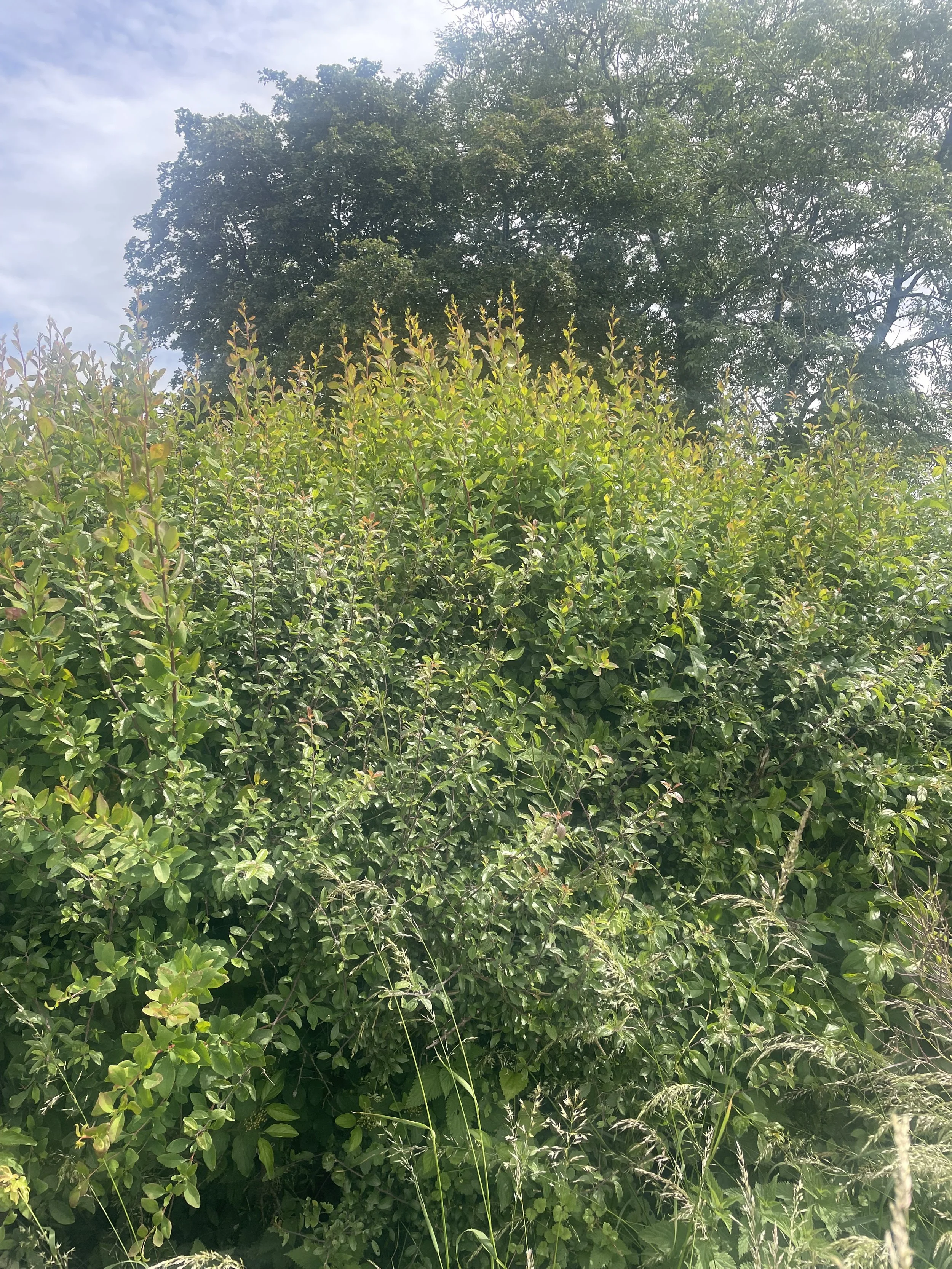
Barberry growing in a hedge at the site of St Mary’s Priory, Kington St Michael
Within his Natural History, John Aubrey created a plant inventory of approximately 150 distinct species that grew across Wiltshire—herbs, wildflowers, ferns, fungi, shrubs, and trees. It is the closest approximation to a county flora that we have for Wiltshire for the seventeenth century. Indeed, it was the first English county survey of the natural world ever attempted, but it remained unpublished at Aubrey's death in 1697, by which time other county surveys were in print.
Throughout this inventory Aubrey made observations about plant distribution that were, by the standards of his period, remarkably sophisticated. His organisation of the material into northern, central, and southern parts of the county is not merely convenient but reflects a genuine understanding that plants differed systematically across the landscape in ways that could be mapped and explained. His explanation for the differential distribution of cowslips, for example, abundant in north Wiltshire and south Gloucestershire where there is clay soil, rare in Herefordshire and south Wiltshire where clay is absent, demonstrates an understanding of the relationship between soil type and vegetation that anticipates the later development of phytogeography.
Aubrey named plants in both Latin and Greek (wherever possible), alongside their Wiltshire vernacular name and carefully noted folk knowledge specific to the species. Some names appear in very few other sources: arsemart, calver-keys, squat-more, sweetcis, pigges-parsley and bandana to name a few. He noted their household, medicinal and even magical usage, and their application in craft and trade. And, with his nuanced understanding of the relationship between man and environment, he provides us with unique insights into Wiltshire in the 17th century. Such as the detail that children gathered strawberries in Colerne woods which were sold to Bath, but in doing so they killed young ash trees by removing their bark to make boxes to hold the fruit.
Valuable as Aubrey's plant inventory is, his plants chapter is not only a record of Wiltshire's flora; it is also, in places, a piece of self-portraiture. At Bowns Hill in Kington St Michael, opposite Minchin Meadows and St Mary's Priory, Aubrey pauses over descriptions of primroses and cowslips to name the exact spot 'where in an unfortunate hower I drew my first breath', his own birthplace and reaches for a line from Ovid's poem on his birthday in exile to reinforce the thought, as if his own birth, like the poet's, had been ill-starred. A county flora becomes, for a moment, autobiography. Aubrey underscores the point with a cross-reference of his own: 'Vide my Villa' that pointed back to the Designatio de Easton Pierce, his 1669 plans for an Italian villa at that same house, abandoned along with the house itself, and bound together with the farewell sketches he made of this same landscape as he faced losing it for good.
Kington St Michael had a great variety of sorrowful plants too. This was, in Aubrey's own theory, no coincidence: north Wiltshire's clay country bred 'sowre and austere plants, as sorrel', wormwood, woodwax, lady's bedstraw among them and he believed this sourness passed directly into the people who lived among them. Primroses and cowslips grew in this same ground, but so, in Aubrey's telling, did something darker, and he seems to have felt his own 'unfortunate hower' of birth was not entirely separate from it.
Into this sour ground, sometime before the dissolution of the monasteries under Henry VIII, the nuns of St Mary's Priory had planted or simply made use of barberry (Berberis vulgaris). Barberry is not, strictly, native to Britain; it is what botanists call an archaeophyte, a plant introduced and naturalised so long ago that its arrival lies beyond record, plausibly brought and encouraged for exactly the purpose Aubrey guesses at: a hardy, thorny hedging shrub whose sharp red fruit could be preserved into medicine and sweetmeat alike. When Aubrey walked the Priory's old boundary a century and a half after the nuns were gone, the barberry was still there. A hedge outliving the medieval institution it once enclosed.
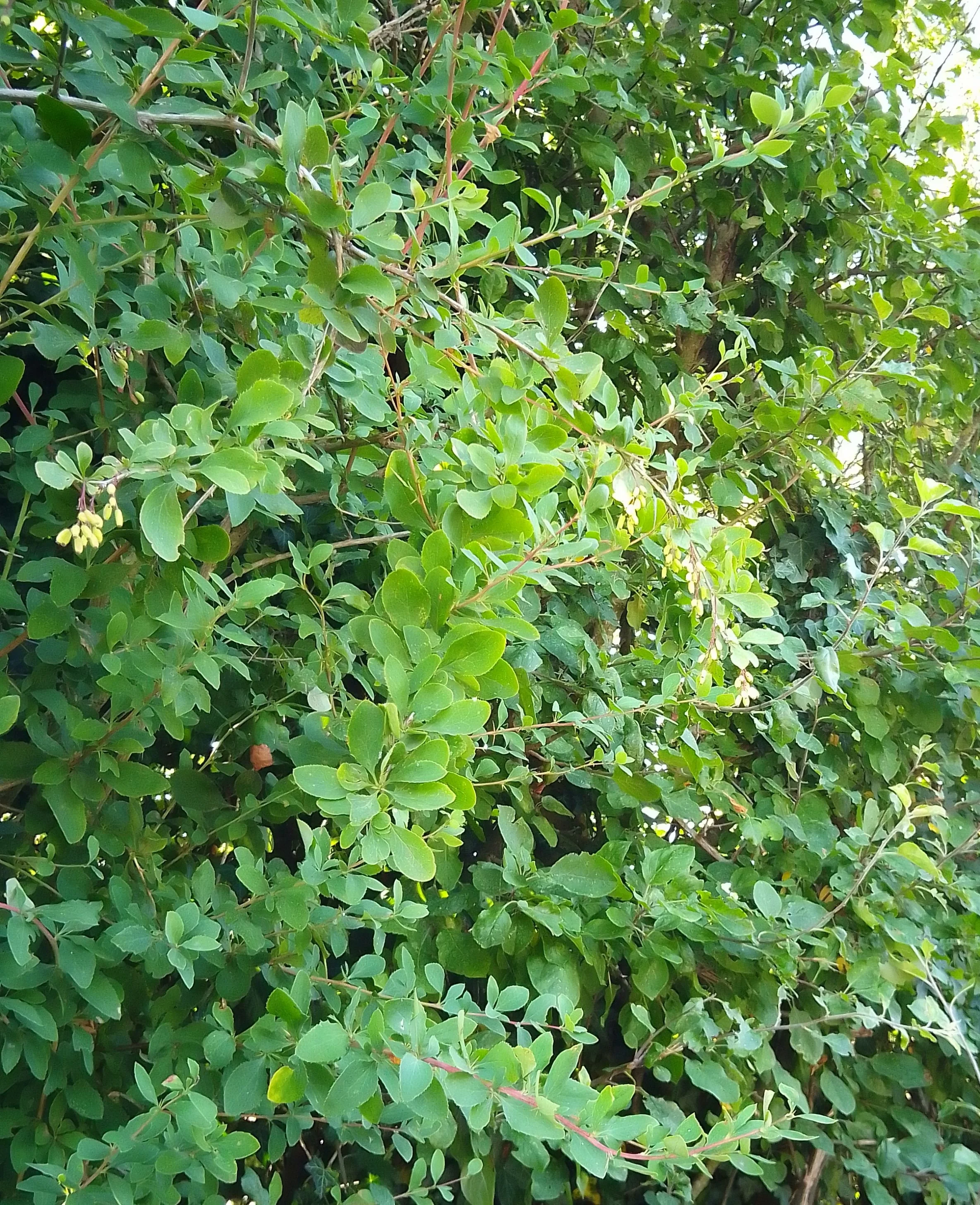
It went on outliving a great deal more. Through the eighteenth and nineteenth centuries, barberry was rooted out of hedgerows across England once it was found to carry wheat stem rust, and by the twentieth century it had become a genuinely rare plant in Britain. By the 1980s, Kington St Michael was one of only a handful of Wiltshire sites where it still grew. This June, four hundred years after Aubrey's birth, two residents, Tim and Jan Storer, showed me the boundary hedge near the Priory site, and there it still is: the same shrub, very possibly descended from the same planting, marking very nearly the same ground Aubrey described. Whatever else has been lost in this place: the Priory, the nuns, the schooling they gave to the girls in their care, the house Aubrey never got to build at Easton Piercy, the barberry has simply gone on growing, sour fruit on a sour soil, in the hedge of a vanished world.