John Aubrey's Natural History, Part 1: Environmental Determinism
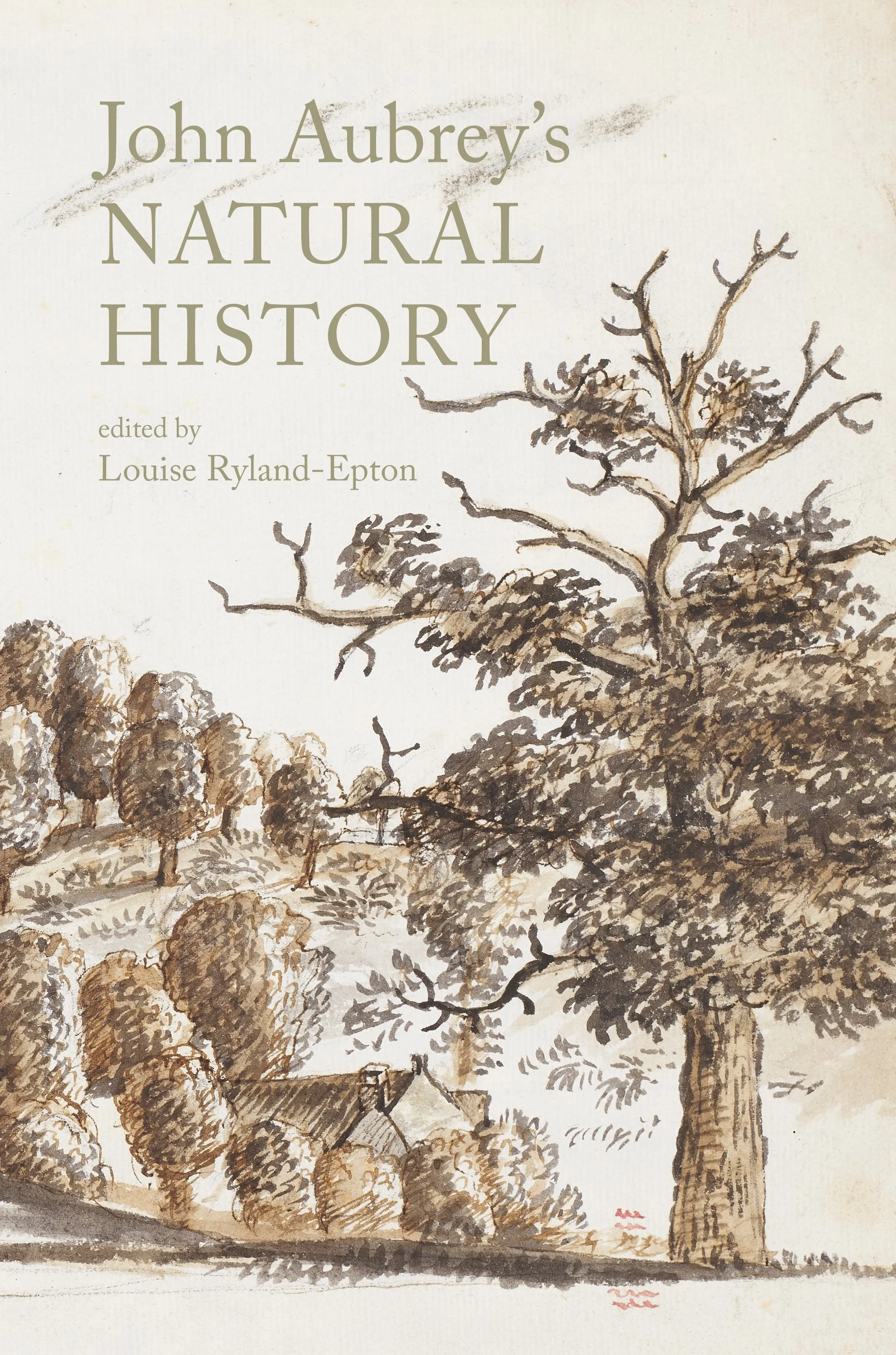
John Aubrey (1626-1697) is best known as a biographer and antiquarian, but Aubrey was also a scientist. ‘There is no nation abounds with greater varietie of soiles, plants and mineralls than ours’, he wrote in the preface to his one surviving scientific work, the Natural History, ‘therefore, it very well deserves to be surveyed’. Begun in 1656 it was the first survey of its kind attempted. However, Aubrey's Natural History was not just a study of flora and fauna, but rather a comprehensive environmental, social, and economic portrait, ostensibly of Wiltshire but arguably of England and Wales, that viewed these elements as an integrated system. Thus, natural phenomena (such as air, springs, stones, plants, animals), human activities (including agriculture, clothing trade, architecture, sports), economic structures (like markets, rents, prices, taxes), and cultural life (such as, writers, witchcraft, pastorals, races) are treated as interconnected parts of a single living system. In his method, Aubrey combined classical knowledge with systematic empirical evidence and folk wisdom. He did not privilege one way of knowing. Some of his insights challenged conventional knowledge; that the earth had been shaped by catastrophic natural events; England may have once been attached to Europe; petrified remains of sea creatures could be found in landlocked places, and some of those creatures no longer existed and so on. Thus, the earth and the species that inhabited it had changed over time. This ran counter to biblical understanding that held that the earth had been made perfect by God.
These insights help to explain why the work was not published in Aubrey's lifetime and why, when John Britton finally published it in 1847, he censored approximately 80% of the introductory chapter. In fact, four hundred years after Aubrey’s birth, the work has yet to be published in its entirety. In the run-up to the publication of the entire work in 2026, I will consider various aspects of Aubrey’s Natural History in a series of blogs that focus on one aspect of each chapter in turn. In this first one, I look at his introduction and specifically his ideas around environmental determinism.
To Aubrey, the soil and air of a place directly shaped everything from the plants to the physical characteristics, temperament, behaviour, and even speech patterns of the people who lived there. This was not metaphorical - he meant it literally. Plants were ‘made’ and nourished by the soil; people ate those plants and were in turn created and nourished by the soil. The resultant ‘constitutions’ or ‘complexions’ as he called them could be both ‘excellently good and excellently ill.’ The evidence Aubrey presented drew on classical knowledge (Virgil, Florus etc); personal observation (‘The French have much better, stronger and clearer voyces than the English’); the observations of others (‘S. Cooper did remarke, that the French-men are all ingeniose’); comparison (‘The hill countrey [chalky] fellowes are more vigorous and couragious [generally] than the vale’); folk wisdom and experimental evidence. To illustrate this theory in practice, it is worth considering two contrasting counties, north Wiltshire, with its heavy clay vales, and Herefordshire, with its red sandstone uplands.
In terms of environment, north Wiltshire was wet, cold, and clay-rich. The soil produced bitter and sour plants like wormwood, wood wax, and sorrel. Marl (nitrous) was its characteristic mineral. Herefordshire, by contrast, had dry, red, sandy soil that produced strong plants like the whitty-tree and oak, with iron (martial) as its mineral. North Wiltshire people were plump and ‘foggy’; their skins pale and livid (blueish); their eyes deepset, although they were ‘handsome enough’. They were phlegmatic in temperament, slow in speech, movement and intellect. They were contemplative, but melancholy, malicious and litigious, prone to religious fanaticism and witchcraft. Their diet was milk and cheese (cooling foods), and their labour was light, focused on dairy production. Herefordshire people, by contrast, were lean, ‘warm’ skinned and hazel-eyed; choleric and sanguine in temperament; quick and clear in speech with a Welsh cadence. They were quick and brisk in movement; quick-witted, hospitable and generous in social behaviour. They enjoyed a varied diet and engaged in hard labour through mixed farming (and possibly mining). They were also long-lived.
Aubrey explained the dramatic differences between the counties through a chain of causation. The clay soil of north Wiltshire produced 'sower plants', wormwood, sorrel, and other acidic vegetation. When people ate food grown in this soil and drank milk from cows feeding on these plants, the sour properties literally entered their bodies, making them 'phlegmatic', cold, wet, and slow. The lack of hard agricultural labour in this dairy country left them with leisure to brood and contemplate, leading them to religious fanaticism and litigiousness. By contrast, Herefordshire's dry, sandy, iron-rich red soil produced robust oaks and vigorous people who laboured hard and had neither time nor temperament for melancholy introspection.
Aubrey did not invoke Providence, divine will, or inherent racial characteristics. Instead, he proposed a materialist explanation of human characteristics based on observable environmental factors. A modern reader might reject his conclusions, but Aubrey’s method offered hypotheses that could be tested against evidence, challenged by alternative hypotheses, and revised or abandoned. And that approach was scientific.