The Ledbury Project: A New VCH Volume for Herefordshire
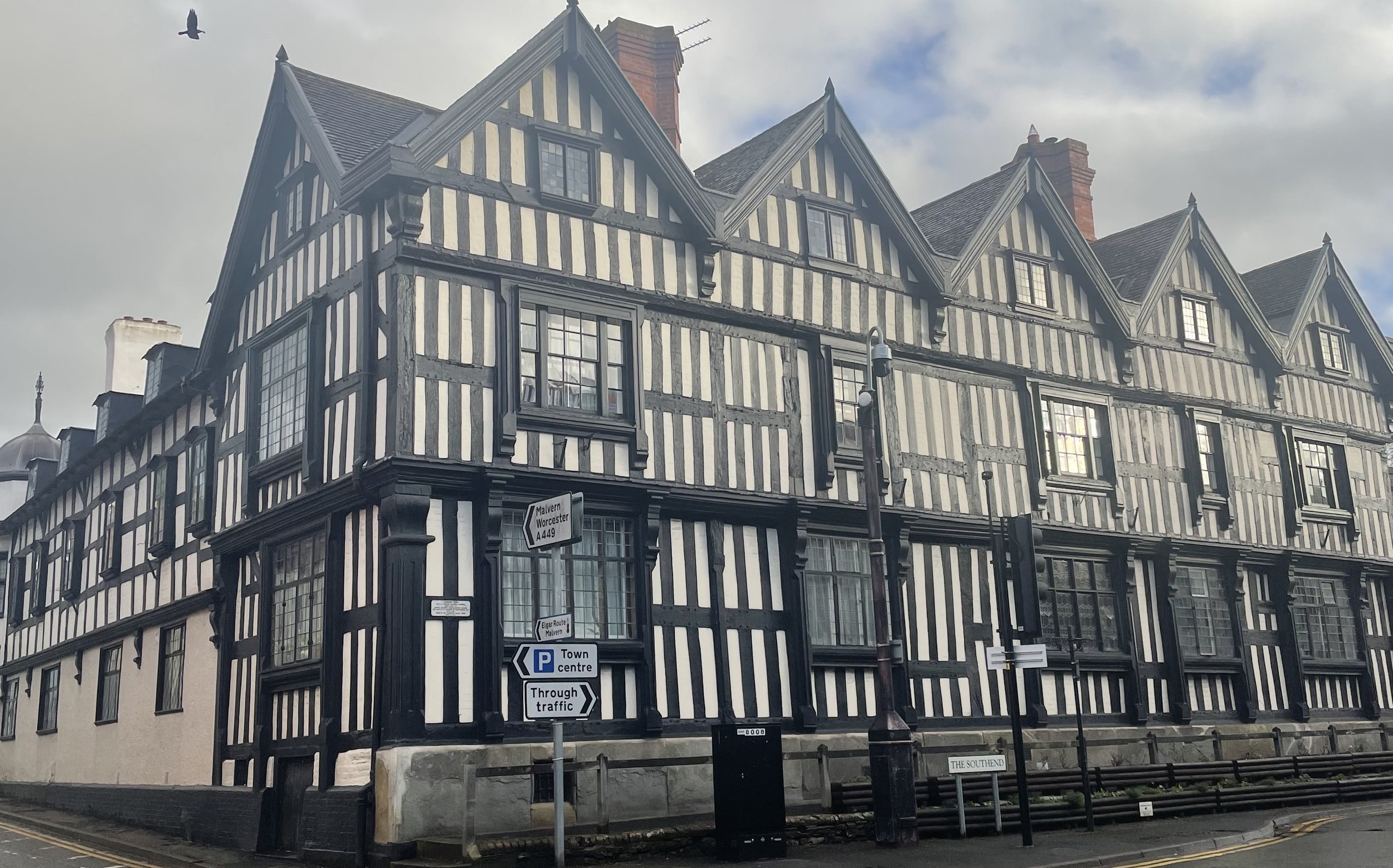
Ledbury Park, Ledbury
I have just begun work on a new Victoria County History volume for Ledbury—the first for Herefordshire in over a century.
However, before you wonder what the Victoria County History is and stop reading, let me start at the beginning. The aim of the Victoria County History project or VCH (as we generally refer to it), is to produce histories of every place in England from the earliest time to the present. It was conceived in 1898 as an encyclopaedia of England in 160 volumes as a monument to Queen Victoria’s Diamond Jubilee. The project was intended to be self-funded: subscribers undertook to purchase future volumes, assisted by private donations. Described as the greatest publishing project in English local history, much has changed in the intervening 128 years, and today the VCH's work is largely supported by charitable trusts organised on a county-by-county basis. Our work is supervised by the Institute of Historical Research at the University of London, who ensure we produce our volumes to the same specification and high academic standard. Our iconic red volumes are essentially reference books. Many are available to view online for free on British History Online. They are a go-to resource for both professional and amateur historians.
The counties where work is in progress range from Oxfordshire, which is only a volume or two away from completion, to Westmorland, which published its first volume last year. In several counties work remains sadly dormant. Herefordshire published a volume in 1908, work thereafter ceased, but over the last 20 years two popular history books on Ledbury and four VCH shorts covering parishes in the surrounding area have been produced. I have been contracted along with Dr Alastair Ayton to write a thematic history of the town of Ledbury which will form the basis of a new volume, the first in over a hundred years.
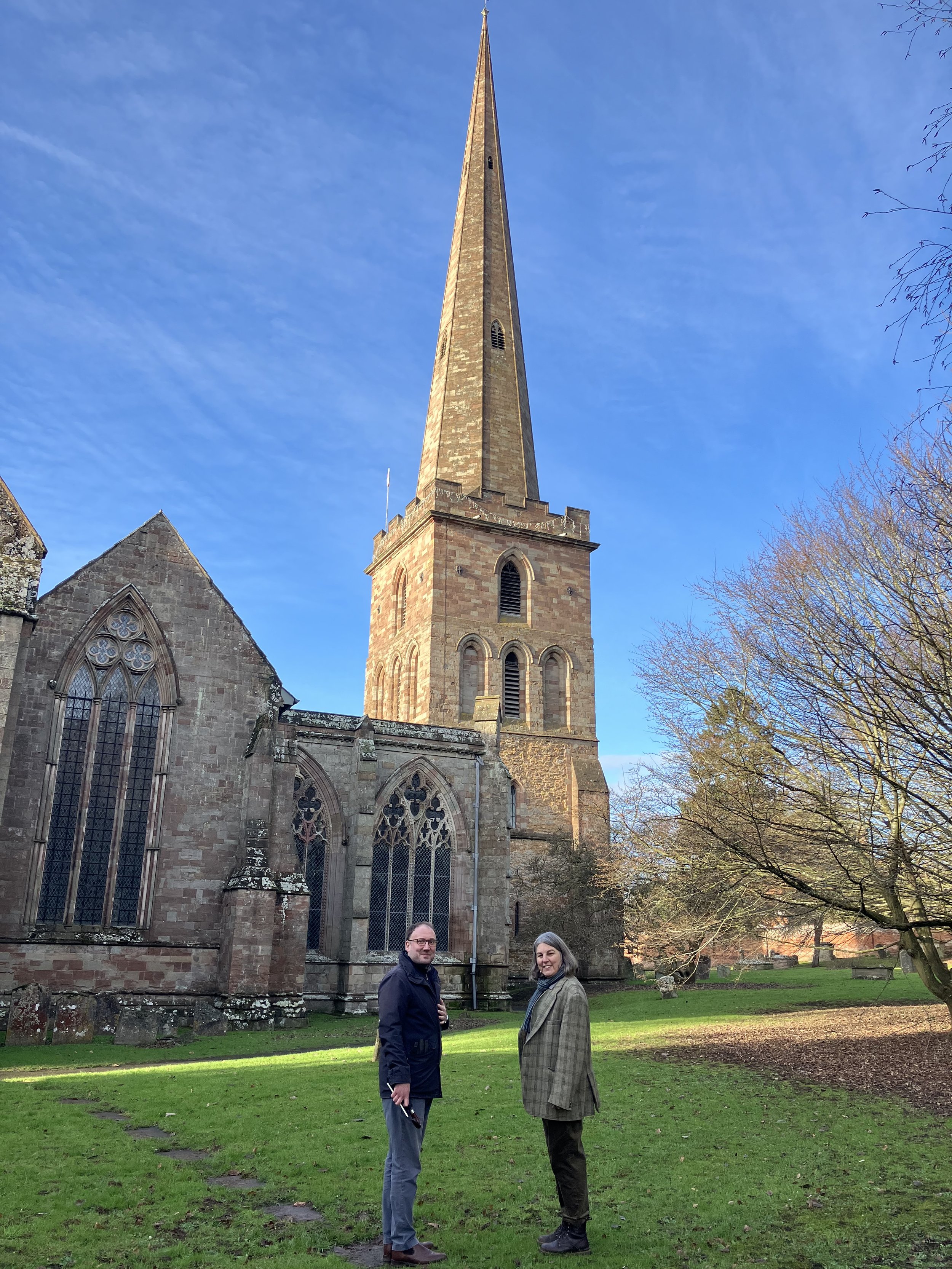
Alastair Ayton and I at St Michael’s church, Ledbury
Working for the VCH poses a challenge for historians in that we must move far beyond the narrow focus of our individual specialisms and write to a high standard on a range of subjects spanning millennia. I am excited about starting work in a new county, after eight years working for the VCH in Wiltshire and Gloucestershire, although a little apprehensive too. From January 2026, Alastair and I will spend two years on Ledbury. We are fortunate to have access to research collected over two decades, two popular histories of the town written for the VCH’s England’s Past for Everyone project, and volunteers who will support our efforts. The task is great, but it is a privilege to work on such a place.
Nestled in Herefordshire between Hereford, Gloucester, and Worcester, Ledbury is surrounded by wooded hills and the River Leadon. As the poet John Masefield wrote, it exudes 'the beauty of the place and the mystery of its past … through century after century.' The town flourished during the late 16th and early 17th century, which has left it a legacy of beautiful timber-framed buildings, something which particularly drew me when I first visited over the summer. But there is far more to Ledbury's story than its striking streetscape. Over the coming months, I will be delving into manorial records, ecclesiastical sources, estate papers, parochial accounts, minutes and much more to piece together the development and life of the town (including the parish of Wellington Heath) from 1550 onwards, exploring everything from its market and trade to its religious life, governance, and the people who shaped its development. Alastair will be tackling the medieval period, taking the story back to its earliest origins.
I have decided to write an occasional blog to chronicle our research journey and highlight the work of Hereford VCH more broadly—the discoveries, the puzzles, the unexpected connections and the frustrations which may arise along the way. I hope it will offer a window into how VCH histories are made and highlight some of Ledbury's fascinating past. I am looking forward to it!
For more information on the work of Herefordshire VCH, please check the website