John Aubrey’s Natural History, Part 14: The Royal Society Copy
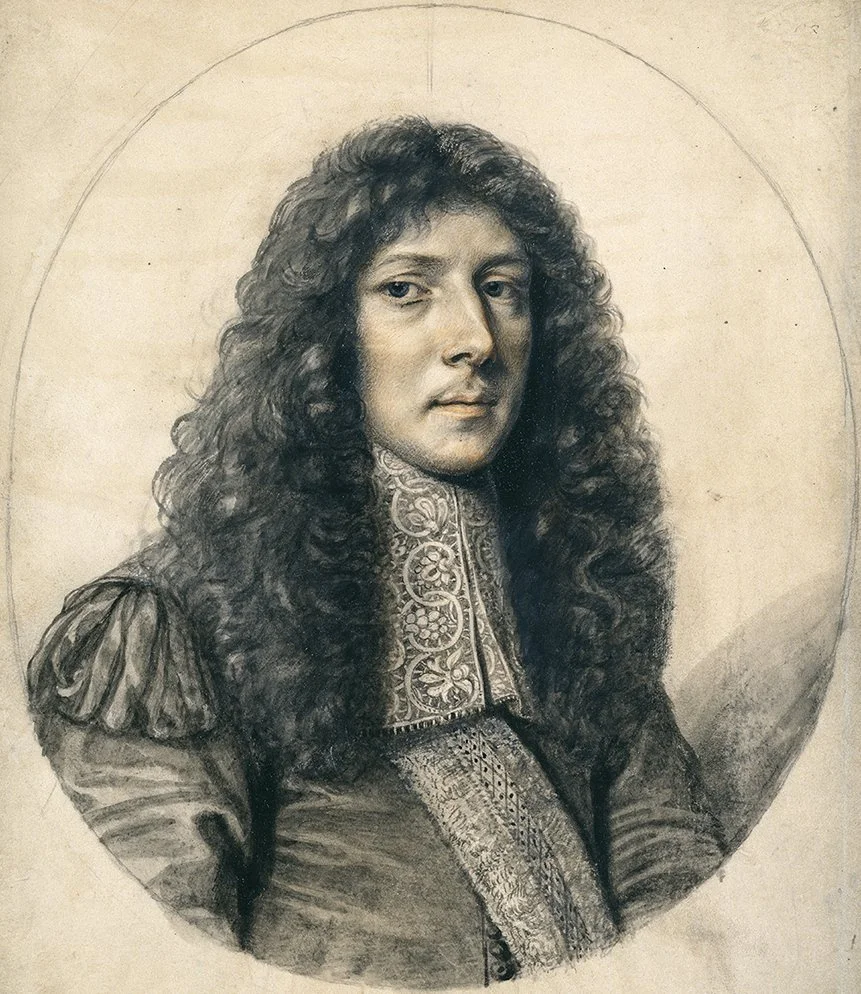
Portrait of John Aubrey, 1666 by William Faithorne.
In 1656, John Aubrey began a survey of the natural history of Wiltshire, the first systematic analysis of an English county's natural world ever attempted, and thirty years later drew his notes together into manuscript form. In 1691, acknowledging the importance of the work, the Royal Society arranged for it to be copied and added to its library, where (as MS. 92) it has remained ever since, except for three months over the summer of 2026 when it became part of an exhibition at Chippenham Museum: Wiltshire & the World: John Aubrey and the Quest for Knowledge.
The Royal Society volume, a weighty tome measuring 14.75 x 9.5 inches, bound in brown leather with elaborate blind-debossed decorations on its spine, is the most complete version of Aubrey's text in existence. According to the Society, it comprises 373 pages (plus several insertions) that were carefully copied by their clerk, Belshazar Gotfried Cramer (or Kramer), for three pence per page. Almost a century and a half later, a copy of this copy was made with the intention of finally publishing the volume in its entirety. However, its Victorian editor, John Britton, decided against it and published instead a heavily edited version in 1847; noting 'after mature deliberation it has been thought more desirable to select only such passages as directly or indirectly apply to the county of Wilts or which comprise information really useful or interesting in itself or curious as illustrating the state of literature and science at the time when they were written.'
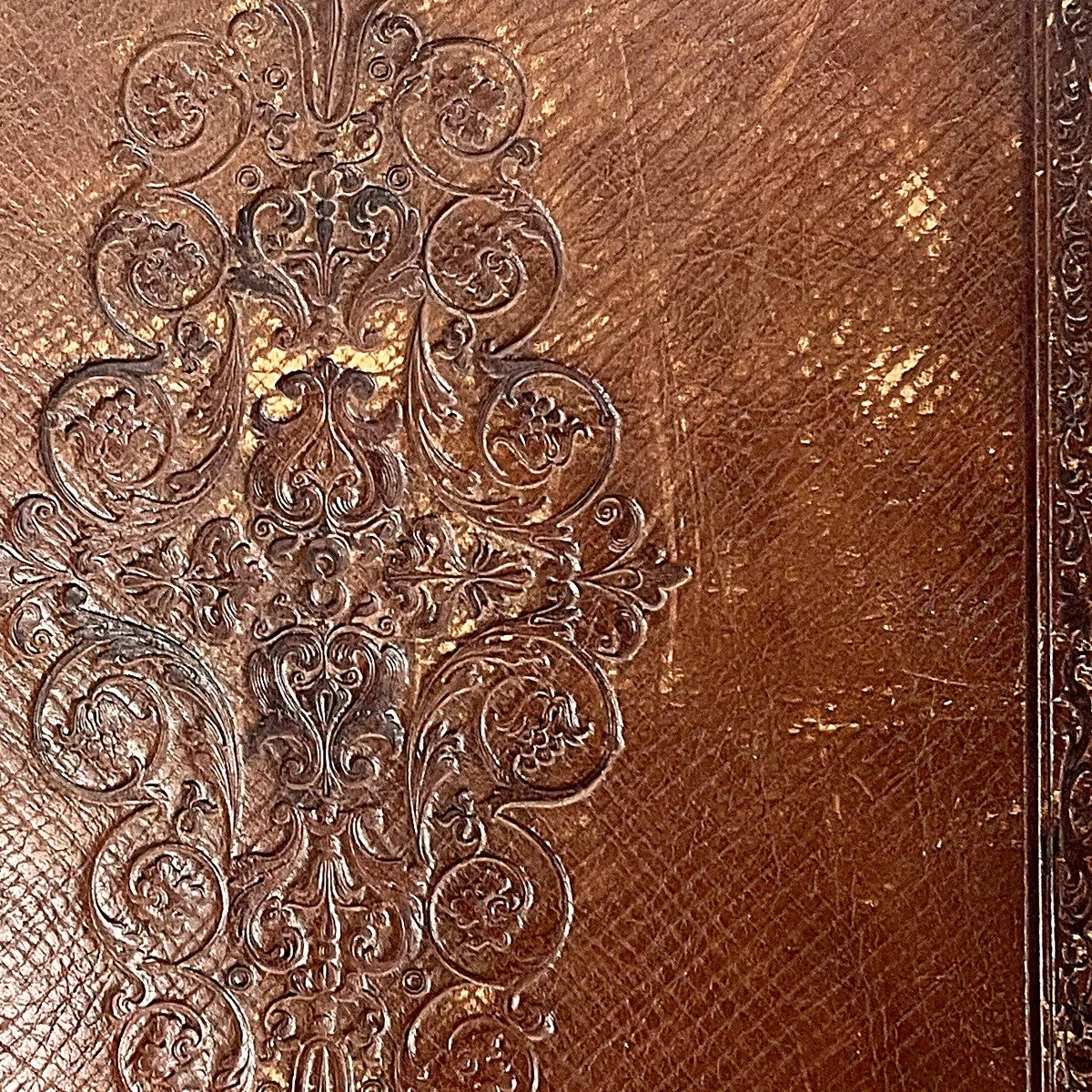
Cover detail of MS. 92 at the Royal Society. The Manuscript copy of John Aubrey’s Memoires of Naturall Remarques in the county of Wilts, 1691.
As I write these words, the Chippenham Museum exhibition is on for one more week, and the manuscript can be viewed. It is opened to display the first two pages of Aubrey's chapter titled 'Formed Stones'. It is a fascinating section, but three-quarters of that chapter have never been printed. Understanding why may provide clues as to why it was unpublished in Aubrey's lifetime and why it has been unpublished in its entirety since.
Britton described this chapter as ‘very brief in the manuscript’, yet printed about 400 of its 1,500 words, describing this action as adapting, as opposed to editing, material for his edition. Britton mentioned the work of 19th-century geologists, perhaps as an excuse for his ‘adaptation’. That excuse was a convenient one, because the subject matter itself was problematic. For Aubrey, formed stones, what we now call fossils, were the remains of things that once lived. Amongst Aubrey's contemporaries, this was a radical idea; most held that these shapes grew naturally in rock. Over a hundred years later, it remained difficult, but the sections cut reveal more insight into the why.
The sections that were cut included rocks resembling cockles found at Dinton, in Wiltshire's Nadder Valley, where Aubrey noted 'they have no counter parts as a cockle or scalop' and questioned whether the species had been lost, a thought about extinction. Similar shells were found at Baverstock, also in the Nadder Valley, and at nearby Shaftesbury in Dorset, where Aubrey wondered if they were the same species. The editing out of the Shaftesbury shells may have made sense with Britton's stated aim of considering only material about Wiltshire, but Dinton was within its borders. The real difficulty was the suggestion that the shells were from a species that no longer existed. The concept of extinction was theologically difficult. If God had created a perfect world, how could any part of that creation vanish? The dominant view held that all creatures mentioned in Genesis still existed somewhere. To suggest otherwise implied either that God's creation was imperfect or that the natural world was mutable and subject to huge changes. It was a problematic notion for Victorian Christians before Darwin, and to many after.
For Aubrey, this formed part of the evidence for his later chapter on early Earth history. Cutting most of the text on formed stones was an editorial decision — the first half of a single operation. Britton removed the evidence in this chapter, then replaced the argument it built with his own summary of early Earth history in the next. Take away the shells from mountaintops, the oyster bed thirty feet down at Farley, the shells at sixty feet near Brinkworth, the Alpine specimens, and the Dinton stones, and the reader could no longer see what the evidence was for. The conclusion, when it arrived, looked like idle speculation rather than the end of a case Aubrey had carefully amassed, which is exactly how Britton then describes it. It was just one more way Britton helped to diminish Aubrey’s reputation as a natural philosopher and burnish the long-held notion that he was just a collector of trifles and hearsay.
In two days, on 16 September 2026, the Natural History will be published in its entirety for the first time, based on the Royal Society copy, which I have transcribed afresh. Three-quarters of the chapter on formed stones, never published, can now, finally, be read by anyone, and readers can see what Britton set aside: which petrified shells, found where, at what depth, and on whose word, a record of the county's ground that exists nowhere else. Ironically, what Britton removed has now turned out to be the part with most value.
The Royal Society copy is at Chippenham Museum until 19 September, and the first two pages of the chapter are open to view. The book launch is on Wednesday 16 September, 4.30–6.30 pm, and everyone is welcome.